
Payments
Owner-operator income: the cost side tells the story
Revenue can rise while income falls if costs grow faster. Track cost per mile live, not at tax time.
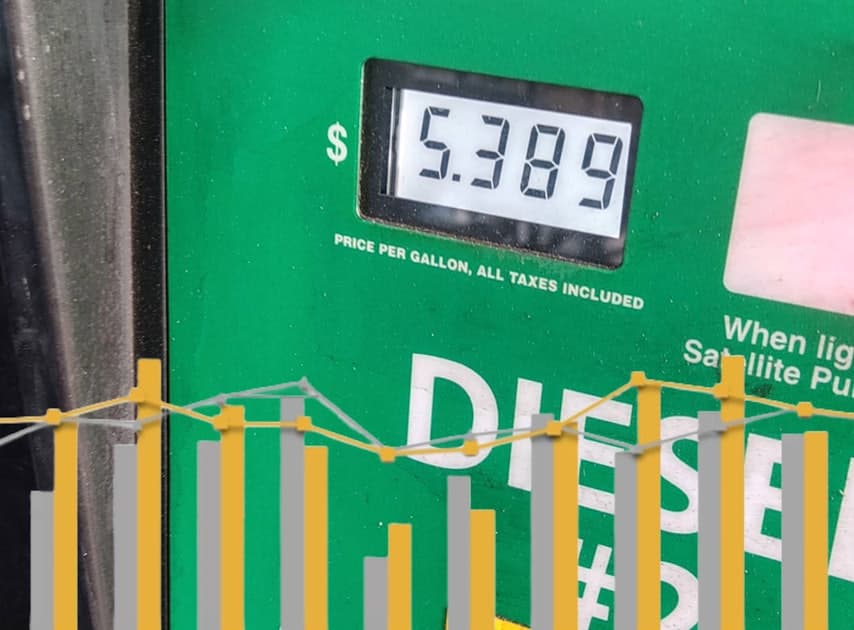
Owner-operators live on the margin between what a load pays and what a mile costs. When income trends shift, it is usually the cost side that did the moving — fuel, insurance, or both.
Income is the second number; cost is the first
A busy owner-operator can bring home more in a strong week and still net less if per-mile costs grew faster. The ratio, not the gross, is the truth.
- The costs eating into income
- Fuel per mile as the biggest lever
- Insurance premiums compounding annually
- Maintenance on aging equipment
Owner-operators do not get paid per load — they get paid per mile after the costs.
Tools that track cost-per-mile live — every tank, every shop visit — turn the margin question from a yearly reckoning into a monthly steering wheel.
Key takeaways
- Owner-operators do not get paid per load \u2014 they get paid per mile after the costs.
- Income is the second number; cost is the first: Tools that track cost-per-mile live \u2014 every tank, every shop visit \u2014 turn the margin question from a yearly reckoning into a monthly steering wheel.
- Owner-operators live on the margin between what a load pays and what a mile costs.
- Income is the second number; cost is the first: A busy owner-operator can bring home more in a strong week and still net less if per-mile costs grew faster.
Related reading

Payments
The best owner-operator bookkeeping never has to happen
Bookkeeping as archaeology is a failure of the operation plane. Book revenue and costs at the event, not at month-end.

Payments
Cost is an event, not a month-end number
Book cost at the event and the ledger closes the book, no month-end archaeology.

Payments
Payment is an infrastructure problem, not luck
When the ledger releases the payment, the trust has already been arranged.