
Autonomy
200 autonomous trucks is a dispatch problem in disguise
Aurora expects 200 driverless trucks running by year-end. The real bottleneck isn't the vehicle, it's the operation plane around it.
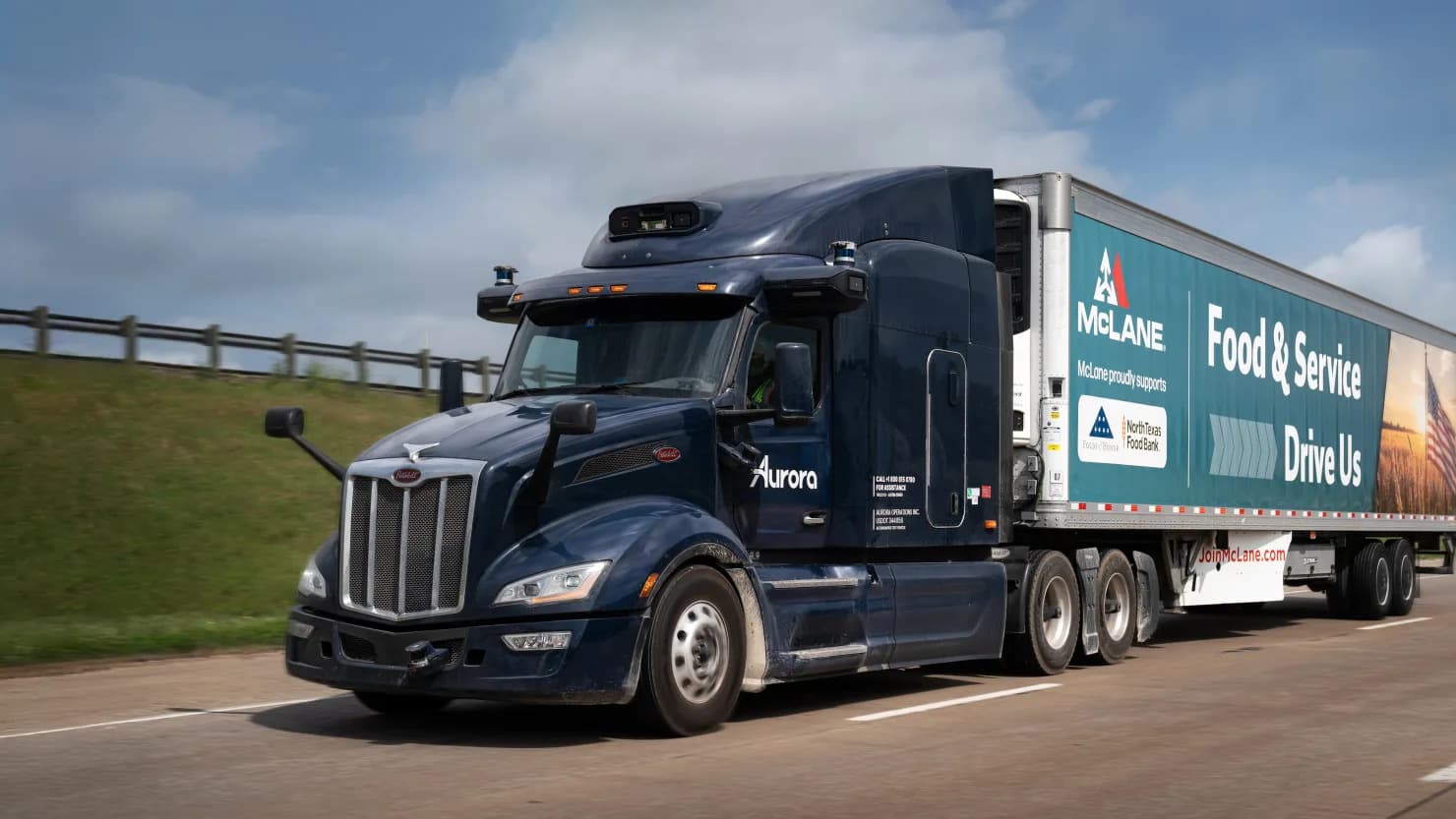
The industry has spent a decade debating when autonomous trucks would stop being a pilot and become a fleet. Aurora’s announcement that it expects 200 driverless Class 8 trucks in operation by year-end — and that demand is already outpacing supply — is the clearest signal yet that the answer is now, and the constraint is operational, not technical.
The bottleneck is no longer the vehicle. It is the operational plane around it: dispatch, routing, exception handling, payments, trust.
At TechnoRides we build that plane. An autonomous truck still needs to be dispatched against a live load, re-routed when a dock closes, settled with a shipper that pays on proof of delivery, and trusted by a carrier that must reconcile the trip to the penny. Autonomy removes the driver from the cab — it does not remove the machine that plans and clears the trip.
Autonomous capacity is coordination-shaped
Every driverless mile multiplies the value of software that can hold a trip’s full lifecycle: the node that owns the operation plane, the registry that brokers it across operators, and the ledger that settles it. When the truck drives itself, the *operation* is the product. That is the part of the stack Aurora, Kodiak and every autonomy vendor assumes will be there — and it is exactly what TechnoRides is built to supply.
- Dispatch that treats an autonomous tractor as one more resource class, not a special case.
- Tracking that is truthful to the centimetre, so handoffs between autonomous and manual legs settle cleanly.
- Payments that clear against delivery events, not driver paperwork.
- Identity for the truck itself, its operator and its insurer on one registry.
Autonomous freight will not succeed as a self-contained silo. It will succeed because it plugs into the same infrastructure every operator already runs on — the infrastructure of driving.
Key takeaways
- The industry has spent a decade debating when autonomous trucks would stop being a pilot and become a fleet.
- Autonomous capacity is coordination-shaped: Every driverless mile multiplies the value of software that can hold a trip’s full lifecycle: the node that owns the operation plane, the registry that brokers it across operators, and the ledger that settles it.
- Autonomous capacity is coordination-shaped: Autonomous freight will not succeed as a self-contained silo.
Related reading
Autonomy
An autonomous-truck permit is an identity problem
Autonomy's real permission slip is the registry that makes permits verifiable, for the truck, the operator, the insurer, the state.

Autonomy
Autonomy's next battleground is the registry
A permit that cannot be verified is a permit that cannot be enforced.
Autonomy
A 2027 autonomy launch is an operations deadline
Autonomy's launch date is an operations deadline: dispatch, insurance, clearing and settlement around the driverless truck.
Autonomy
Autonomy scales when trust scales
An autonomous mile is only useful if someone's ledger accepts it.